
When the temperature dips to 5 degrees Celsius, it’s time to pull out those cozy sweaters and warm drinks. But just how chilly is that in Fahrenheit? If you’ve ever found yourself scratching your head over the conversion, you’re not alone. It’s like trying to decipher a secret code that only meteorologists seem to understand.
Understanding Temperature Conversions
Temperature conversions play a crucial role in everyday life, especially when dealing with varying climates. Converting from Celsius to Fahrenheit involves a simple formula, yet many find it challenging. To convert Celsius to Fahrenheit, multiply the Celsius temperature by 9/5 and then add 32. For example, applying this to 5 degrees Celsius gives a Fahrenheit equivalent of 41 degrees.
Converting temperatures can clarify weather expectations. Knowing that 5 degrees Celsius equals 41 degrees Fahrenheit helps individuals prepare for the day. By understanding these conversions, people can choose appropriate clothing and activities that suit the weather conditions.
Additionally, accuracy matters in specific fields like cooking or science. Recipes often use Fahrenheit in the United States, making such conversions important for precise measurements. Understanding how to convert supports accuracy and promotes better outcomes.
Common confusion arises from different contexts. Many may intuitively understand Celsius for cold weather but struggle with the Fahrenheit equivalents. Avoiding confusion requires familiarity with the conversion process.
In practice, frequently encountering temperature scales enables efficiency. By developing a grasp on conversions, individuals can quickly navigate conversations about weather, travel, and more. The simple formula provides a reliable means to engage with varying temperature standards effectively.
The Fahrenheit Scale
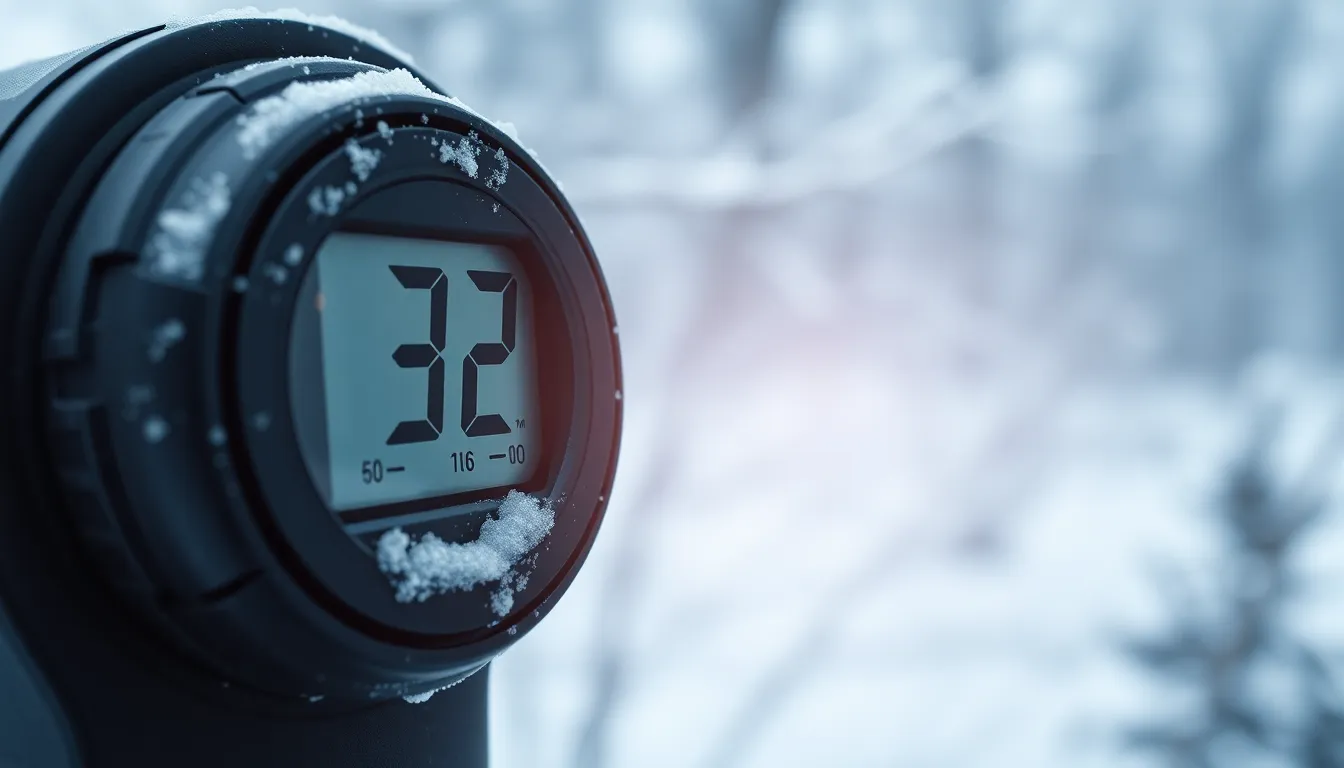
The Fahrenheit scale represents one of the key methods for measuring temperature. Developed by Daniel Gabriel Fahrenheit in the early 18th century, this scale originated from a series of temperature measurements.
History of Fahrenheit
Fahrenheit introduced his temperature scale in 1724. The original reference points included the freezing point of a brine solution at 0 degrees and the average human body temperature at 96 degrees. Later, adjustments made body temperature 98.6 degrees. Over time, the scale gained popularity in the United States and other countries, solidifying its role in temperature measurement.
Characteristics of Fahrenheit
Fahrenheit’s scale enhances everyday temperature perception. Each degree on this scale represents a smaller temperature increment compared to Celsius. For instance, 32 degrees Fahrenheit marks the freezing point of water, while 212 degrees Fahrenheit indicates its boiling point. This scale provides a more granular view of temperature fluctuations commonly experienced in daily life. Many people find the Fahrenheit scale intuitive for weather-related discussions and daily activities.
The Celsius Scale
The Celsius scale is widely used around the globe for temperature measurement. It provides a clear system for indicating how warm or cold something is.
History of Celsius
Anders Celsius, a Swedish astronomer, introduced the Celsius scale in 1742. He initially set the freezing point of water at 100 degrees and the boiling point at 0 degrees, which is the opposite of how temperatures are understood today. Later, this system was inverted to its current form by Carl Linnaeus, who found the new scale more practical for everyday use. The scale quickly gained acceptance across Europe and became standardized internationally, remaining a key measure in scientific disciplines and daily life.
Characteristics of Celsius
Celsius measures temperature based on the properties of water. The freezing point is established at 0 degrees Celsius, while the boiling point is at 100 degrees Celsius. Each degree corresponds directly to a change in thermal energy, making it simple to gauge temperature variations. This scale is particularly effective in scientific contexts due to its straightforward relationship with Kelvin, a scale crucial for thermodynamic calculations. Celsius is commonly found in weather forecasts worldwide, allowing for easy comparisons of temperature that everyone can understand.
Converting 5 Degree Celsius to Fahrenheit
Converting 5 degrees Celsius to Fahrenheit simplifies understanding temperature differences. The essential formula helps people transition between these two systems effectively.
The Mathematical Formula
To convert Celsius to Fahrenheit, multiply the Celsius temperature by 9/5 and then add 32. This formula shows the relationship between the two scales clearly. For example, when applying the formula to 5 degrees Celsius, the calculation becomes (5 × 9/5) + 32. That results in 41 degrees Fahrenheit, showcasing how temperature values shift across different systems. Understanding this formula enhances one’s ability to manage temperature conversations succinctly.
Step-by-Step Conversion Process
Converting 5 degrees Celsius into Fahrenheit involves a straightforward process. First, multiply 5 by 9, which equals 45. Next, divide 45 by 5, yielding 9. After that, add 32 to 9, resulting in a final answer of 41 degrees Fahrenheit. Each step ensures accuracy in temperature conversion. Practicing this method for various Celsius readings facilitates quicker mental conversions in everyday situations. Familiarity with this process empowers individuals in climate discussions and personal interactions regarding temperature changes.
Practical Applications of Temperature Conversion
Understanding temperature conversion plays a significant role in daily life. Individuals often rely on Celsius to Fahrenheit conversions when checking weather forecasts. Clothing choices depend on accurate temperature readings, particularly during cold months. For instance, knowing that 5 degrees Celsius equals 41 degrees Fahrenheit helps people decide whether to wear a heavy coat or light jacket.
The culinary world also benefits from temperature conversions. Recipes originating from different countries may use Celsius, while some culinary guides prefer Fahrenheit. Chefs recognize the importance of precise measurements, as cooking requires accuracy in temperature. This detail can determine dish outcomes, including baked goods and syrups.
In scientific settings, accurate temperature conversions are crucial. Researchers utilize both scales for experiments, ensuring consistency across studies. Proper knowledge of conversions aids scientists in communicating results clearly. Precision in these contexts facilitates collaboration and data sharing among professionals.
Traveling to countries that use different temperature scales demands familiarity with conversions. Tourists often check weather conditions in both Celsius and Fahrenheit to plan their trips. Having this skill allows travelers to adapt their daily activities and enjoy their experiences fully.
Home heating and cooling systems also depend on temperature understanding. Programmable thermostats typically use Fahrenheit in the U.S., while many other systems may operate in Celsius. Knowledge of conversions ensures homeowners set appropriate temperatures for comfort, energy efficiency, and system performance.
Understanding the conversion from 5 degrees Celsius to Fahrenheit is essential for navigating daily life. It not only aids in making informed clothing choices but also enhances interactions around weather and cooking. Familiarity with both temperature scales can simplify discussions and improve accuracy in various fields. Whether planning a day out or experimenting in the kitchen, knowing how to convert these temperatures ensures individuals are well-prepared. Embracing this knowledge empowers everyone to engage confidently with temperature-related conversations and decisions.